Hard cooler vs soft cooler
- Igloo Marine Ultra 25 Qt Latitude Hard Cooler, White
 Igloo Marine Ultra 25 Qt Latitude Hard Cooler$34.98Check priceSpec sheet
 - Maelstrom 30 Can Soft Cooler Bag, Double Deck Leakproof Portable Ice Chest
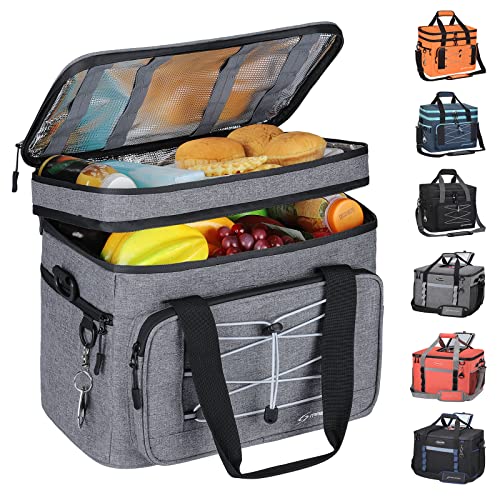 Maelstrom 30 Can Soft Cooler Bag$26.74Check priceSpec sheet
The short verdict
- Buy the hard cooler if you want the best ice retention for the size, a surface you can stand or sit on, and a permanent spot in the trunk.
- Buy the soft cooler if trunk space is tight, you need something that collapses flat when empty, or you are carrying it any real distance from the car.
| Hard cooler (Igloo Marine Ultra 25 Qt) | Soft cooler (Maelstrom 30 Can) | |
|---|---|---|
| Price | $34.98 | $26.74 |
| Capacity | 25 qt | About 30 cans (roughly 22 to 24 qt packed with ice) |
| Shell | Rigid injection-molded plastic | Insulated fabric with a leakproof liner |
| Can be sat or stood on | Yes | No |
| Packs flat when empty | No | Yes |
| Typical ice retention | Longer than a soft cooler at this size; hinged hard coolers commonly claim multi-day retention, expect 40 to 60 percent of that in real use | Shorter than a same-size hard cooler; soft coolers lose ground faster once ice starts melting since the shell flexes and loses its seal shape |
| Best for | The main food or drink cooler that stays in the car | A day-trip cooler, a second cooler for drinks, or carrying gear a short distance on foot |
Does a hard cooler actually keep ice longer than a soft cooler?
Generally yes, at a similar price and size. A rigid shell holds its insulating foam or wall thickness in a fixed shape and seals more consistently around the lid, while a soft cooler's fabric walls compress as ice melts and contents shift, which lets more warm air in over time. The gap is not huge on a single day trip, but it widens the longer the cooler sits. Figure out how much ice you actually need for your group and trip length with the ice calculator before choosing either style.
Neither of these is a rotomolded cooler, so both fall into the shorter end of the ice-retention spectrum compared to a YETI or RTIC. See where each cooler class lands on the ice retention chart.
When does a soft cooler actually win?
Soft coolers earn their place anywhere a rigid box is the wrong shape for the job: tucked into a back seat footwell, carried on a shoulder strap from the car to a picnic table, or stored flat in a garage between trips instead of taking up a shelf. If your car camping setup already has one hard cooler for food, a soft cooler as a second drinks cooler is a common and practical pairing, since drinks get opened far more often than food.
Can a soft cooler replace a hard cooler for a weekend trip?
For a one or two night trip with a small group, yes, especially if you are also bringing reusable ice packs instead of loose ice, since packs do not create meltwater the way cubed or block ice does. Past two nights, or for a family that needs real food storage volume, a hard cooler is the safer main choice.
Do hard coolers need to be rotomolded to be worth buying?
No. A basic hinged hard cooler like the Igloo Marine Ultra 25 Qt already beats a soft cooler on ice retention and durability for a fraction of what a rotomolded YETI or RTIC costs. Rotomolded construction is the next step up for longer or hotter trips, not a requirement for every car camping family. Compare the full lineup at best camping coolers.
What is the honest downside of each style?
Hard coolers take up a fixed chunk of trunk space whether they are full or empty, and a cheap hinged lid can crack or warp with years of sun exposure. Soft coolers puncture more easily, cannot be stood or sat on around the fire, and most lose the ice-retention race once the trip runs past a day or two. Neither downside is disqualifying; they just point to different jobs. See the dedicated shortlists at best soft coolers and best camping coolers.
Other options on both sides
 Maelstrom 30Can Collapsible Soft Cooler Bag$26.92Check price
 Maelstrom 30 Can Insulated Cooler Bag$33.96Check price
 Coleman Chiller 60-Quart Rolling Cooler with Wheels$62.88Check priceSpec sheet
 Coleman Classic Series Insulated Portable Rolling Cooler$108.71Check priceSpec sheet
 Coleman Vintage Steel Belted Cooler$149.99Check price
 Igloo Stainless Steel Legacy 54QT Cooler$239.99Check price
Keep planning
Frequently asked questions
Is a soft cooler good enough for a full camping trip?
For one or two nights with a small group, a quality soft cooler like a 30-can bag can work as the only cooler, especially paired with reusable ice packs. For three or more nights, or a family that needs real food storage, a hard cooler holds ice longer and has more usable volume for the same rough price.
Why do hard coolers hold ice longer than soft coolers of similar size?
A rigid shell keeps its wall thickness and lid seal consistent as ice melts, while a soft cooler's fabric walls compress and shift, letting in more warm air over time. The gap is small on day one and grows through days two and three, which is why hard coolers are the better choice for longer trips.
Can I use a soft cooler as my only cooler for a family of four?
It is possible for a single overnight, but a 30-can soft cooler runs out of both capacity and ice life fast for four people on a multi-night trip. Most families in that situation are better served by a hard cooler sized with the cooler size calculator.
Do soft coolers leak?
A quality soft cooler like the Maelstrom line uses a leakproof liner specifically to prevent this, but any soft cooler is more prone to seam or zipper failure over years of use than a rigid hard-shell cooler. Check the liner and zipper seal before a trip if the cooler has seen heavy use.
What is the best use for a small soft cooler on a car camping trip?
A dedicated drinks cooler that gets opened constantly, or a day-use cooler for the beach or trailhead that does not need to make the multi-day ice-retention cut the main food cooler does. Keeping drinks separate also means the food cooler gets opened less often, which helps its ice last longer too.
Get the car camping checklist
One printable page: the full packing checklist plus our three complete setups with current prices. No sales sequence.
Used only to send the list. You can also read every setup free on this site.Researched guidance, not professional advice. Figures are published specifications or clearly labelled conventions; check your own gear's manual and your campground's rules.