Sleeping in your car vs a tent
- DikaSun Car Air Mattress, Inflatable SUV Truck Camping Mattress
 DikaSun Car Air Mattress$54.34Check priceSpec sheet
 - Romswi 6 Person Instant Camping Tent, 60-Second Setup
 Romswi 6 Person Instant Camping Tent$98.99Check priceSpec sheet
The short verdict
- Sleep in the car if you are traveling solo or as a couple, arriving late, or camping somewhere with no good tent site, like a rest stop or a parking-area campground.
- Pitch a tent if you are camping as a family, want real standing room and space to spread out gear, or plan to stay put for more than a night or two.
| Sleeping in the car | Tent (Romswi 6 Person Instant) | |
|---|---|---|
| Setup cost example | $54.34 for a car air mattress | $98.99 |
| Setup time | A few minutes to inflate and lay out | About 60 seconds with the instant frame |
| Space per person | Tight; limited to the vehicle's interior footprint | Roomier; a 6-person tent gives real floor space and often standing height near the center |
| Warmth on cold nights | Better; the vehicle's cabin blocks wind and holds some ambient heat | Colder; a tent only blocks wind and traps body heat, it does not retain cabin warmth |
| Works on any surface | Yes, anywhere you can legally park | Needs reasonably flat, stakeable ground |
| Good for a family of four or more | No, realistically one to two people | Yes |
Is it actually warmer to sleep in the car than in a tent?
Generally yes, for a simple reason: the vehicle's metal and glass shell blocks wind completely and the cabin holds a bit of residual warmth longer than open tent fabric does, even with the engine off. That said, an uninsulated car floor and windows still lose heat overnight, so you still need the right sleep system underneath you. Check the expected overnight low against the sleeping pad R-value calculator either way, since a plain air mattress in a car insulates about as poorly as one on the ground.
How much space do you actually get sleeping in the car?
It depends entirely on the vehicle. A compact SUV with the rear seats folded typically gives one adult a workable sleeping footprint; a minivan or three-row SUV can fit two adults lying flat. Check your specific cargo dimensions with the cargo fit calculator before committing to this setup, since not every vehicle has enough flat, uninterrupted floor space for a comfortable night.
When does a tent clearly win over sleeping in the car?
Any time more than two people need to sleep, or when standing room to change clothes and move around matters. A 6-person tent like the Romswi gives a family real floor space to spread out sleeping bags, pads, and gear in a way no vehicle interior can match. Tents also let you keep the car free to actually drive somewhere during the day, which a car-sleeping setup does not.
Can you combine both on the same trip?
Yes, and it is a common car camping pattern: pitch a tent as the main sleeping and living space for the family, but keep a car air mattress on hand for a late arrival night, a rest-stop overnight on the drive out, or as a backup if weather makes tent sleeping unpleasant. See basic car camping setup for how the two fit together.
Is sleeping in the car actually allowed everywhere?
Not always. Many developed campgrounds expect you to use the assigned tent pad rather than sleep exclusively in a parked vehicle, and some locations restrict overnight vehicle sleeping entirely. A tent is the safer default for a standard drive-up campsite; car sleeping is more commonly used for a highway rest stop, an overflow lot, or a specific car-camping-permitted area. Check the site rules before planning to skip the tent.
Other options on both sides
 Onirii Inflatable Car Air Mattress Back Seat Bed with Air Pump$30.67Check price
 OhGeni Air Mattress Queen with Built in Pump$62.99Check priceSpec sheet
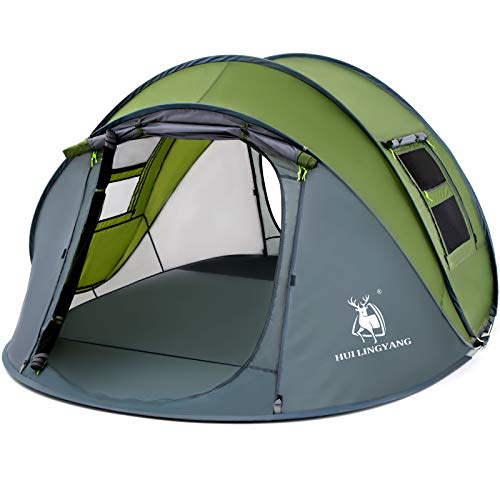 4 Person Easy Pop Up Tent$84.99Check price
 HINSTANT 4/6/8/10 Person Instant Tent,Pop Up Tents for Camping with$185.99Check price
 FanttikOutdoor Zeta C10 Pro 10 Person Tent for Camping Setup in 60s$212.49Check price
 Coleman 4/6/8/10 Person Instant Camping Tent with 1-Minute Setup$379.99Check price
Keep planning
Frequently asked questions
Is it safe to run the heater while sleeping in the car overnight?
No. Never run the engine or a fuel-burning heater to stay warm while sleeping in a parked car, because carbon monoxide can build up fast inside the cabin and it is odourless. Use insulated sleeping gear and closed windows for wind protection instead, and if you need active heat, use a battery-powered option rated safe for enclosed spaces.
Do I need a special mattress to sleep in my car?
A mattress shaped for a vehicle's specific floor contours, like a car-specific air mattress, packs more evenly into wheel wells and seat gaps than a standard rectangular camping pad. A regular sleeping pad works too if your cargo floor is flat enough once the seats are folded.
How many people can comfortably sleep in an SUV?
Realistically one to two adults lying flat, depending on the vehicle's folded cargo length and width. Check your specific model's dimensions with the cargo fit calculator before planning on more than that; most families move to a tent once a third person needs a sleeping spot.
Is a tent warmer than people expect for cold-weather car camping?
It can be, with the right gear. A tent alone does not retain heat the way a vehicle cabin does, but a properly rated sleeping bag paired with an insulated pad underneath closes most of that gap. See how to stay warm car camping for the full setup.
What is the main downside of sleeping in the car instead of a tent?
Limited space for more than one or two people, and losing the ability to drive anywhere without disturbing your sleeping setup. It is a fine choice for a solo trip or a single overnight stop, but it does not scale to a family the way a tent does.
Get the car camping checklist
One printable page: the full packing checklist plus our three complete setups with current prices. No sales sequence.
Used only to send the list. You can also read every setup free on this site.Researched guidance, not professional advice. Figures are published specifications or clearly labelled conventions; check your own gear's manual and your campground's rules.