Propane vs butane camp stove
- Coleman Triton 2-Burner Propane Stove, Portable Camping Cooktop
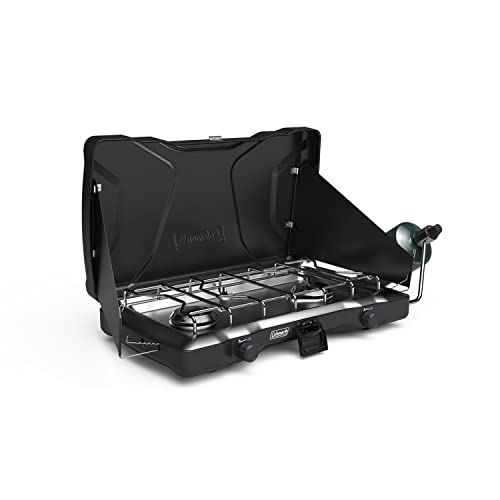 Coleman Triton 2-Burner Propane Stove$83.99Check priceSpec sheet
 - Coleman Classic 1-Burner Butane Stove, Portable with Carry Case
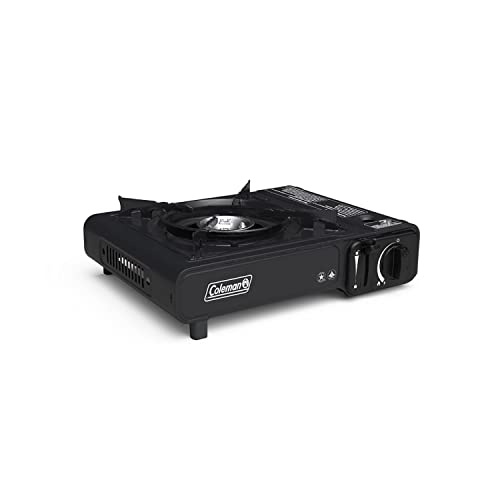 Coleman Classic 1-Burner Butane Stove$39.99Check priceSpec sheet
The short verdict
- Buy propane if you camp in cold weather, cook for a group, or want the option to run a 20 lb tank for longer trips.
- Buy butane if you are cooking for one or two people in mild weather and want the lightest, cheapest setup to pack.
| Propane (Coleman Triton 2-Burner) | Butane (Coleman Classic 1-Burner) | |
|---|---|---|
| Price | $83.99 | $39.99 |
| Burner output | 22,000 BTU total (2 burners) | 7,650 BTU |
| Fuel container | 16.4 oz (1 lb) disposable cylinder, or a 20 lb tank with an adapter hose | 8 oz butane canister |
| Fuel energy per container | About 21,600 BTU per 1 lb cylinder; about 432,000 BTU per 20 lb tank | About 10,600 BTU per 8 oz canister |
| Cold-weather performance | Handles cold reasonably well; pressure still drops some below about 40F | Vaporizes poorly near freezing; can sputter or fail to light in cold weather |
| Approx. burn time on high, 1 lb cylinder or 1 canister | About 1 hour across both burners on high, per Coleman | About 1.4 hours on high |
| Cost per trip of 3+ days | Cheaper per BTU with a 20 lb tank and adapter hose | More expensive per BTU over a multi-day trip |
What is the real difference between propane and butane camp stoves?
Propane and butane are both liquefied petroleum gases, but they vaporize at different temperatures. Propane stays pressurized and usable down into genuinely cold weather, while butane starts struggling to vaporize as temperatures approach freezing, which is why butane stoves are more of a fair-weather tool. Propane cylinders and tanks are also bulkier and heavier per BTU than butane canisters, which is butane's main advantage. Figure out how much fuel your trip actually needs with the propane calculator.
Burner output matters as much as fuel type here. The Triton's 22,000 BTU across two burners lets you run a pot and a pan at once; the Classic's single 7,650 BTU burner is built for simple, one-pot meals for a smaller group.
How long does a propane cylinder actually last?
A standard 16.4 oz propane cylinder holds about 21,600 BTU. Running a 2-burner stove like the Triton at full output on both burners empties a cylinder in about an hour, per Coleman's own rating, though typical cooking runs closer to 60 percent throttle, which stretches that closer to an hour and a half in practice. A 20 lb tank holds roughly 432,000 BTU, which is about 20 times the fuel of a single 1 lb cylinder, and becomes noticeably cheaper per BTU on trips of three or more days once you factor in an adapter hose. See the full breakdown on the propane burn time chart.
Why does butane fail in cold weather?
Butane needs a warmer temperature than propane to turn from liquid to usable gas inside the canister. As the canister gets close to freezing, internal pressure drops and the stove can sputter, run weak, or fail to light at all, especially as the canister empties and cools further from its own vaporization. This makes butane stoves a poor choice for shoulder-season or high-elevation camping where nights can dip near or below freezing.
Which fuel is cheaper over a multi-day trip?
Propane, once you switch to a 20 lb tank with an adapter hose instead of buying single-use 1 lb cylinders. Butane canisters are cheap individually but carry a higher cost per BTU than bulk propane, and a family cooking three meals a day for several days will burn through multiple canisters. For weekend trips where you are only cooking a handful of meals, the price gap barely matters.
Do I need a dual-fuel stove instead of choosing one fuel?
Some stoves run on either propane or butane with an adapter, which is a reasonable middle ground if you camp across a range of seasons and do not want to own two stoves. For most car camping families, matching the stove to your typical camping season, cold weather leans propane, mild weather and light packing leans butane, is the simpler call. See the full lineup at best camp stoves.
Other options on both sides
 Gas One Portable Butane Camping Stove with Case$24.99Check price
 GasOne 15,000 BTU Propane or Butane Stove Dual Fuel Stove Portable$59.99Check priceSpec sheet
 GasOne B-5350A Propane Burner Cooker$116.99Check price
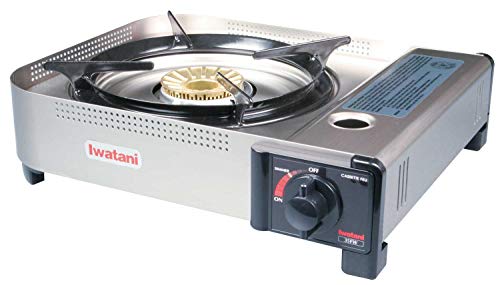 Iwatani 35FW Single-Burner Butane Portable Cooktop Indoor & Outdoor$129.99Check price
 CAMPLUX 3 Burner Camping Stove for Outdoor Cooking$179.99Check price
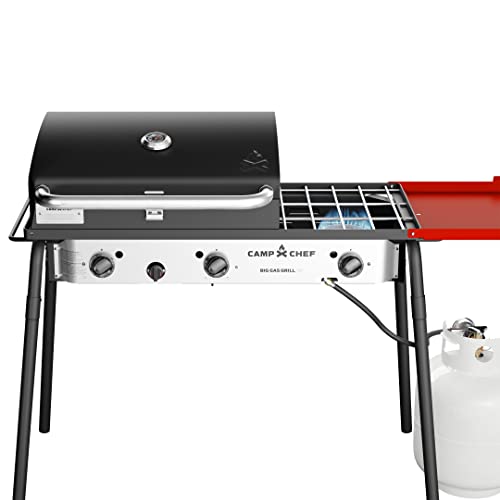 Camp Chef Big Gas Grill$499.99Check price
Keep planning
Frequently asked questions
Can I use butane and propane in the same stove?
Only if the stove is specifically built as dual-fuel, which some camp stoves are. A stove designed for one fuel type is not safely convertible to the other without a manufacturer-approved adapter, since the regulators and valve fittings differ between the two fuel systems.
Why does my butane stove sputter on cold mornings?
Butane needs a warmer temperature than propane to vaporize from liquid to gas inside the canister. As the canister approaches freezing, especially once it is partially empty and has cooled further from its own vaporization, pressure drops and the stove can sputter, burn weak, or fail to light.
Is a 20 lb propane tank worth bringing for a weekend trip?
Usually not. The cost and space savings of a 20 lb tank only pay off on trips of roughly three or more days of regular cooking. For a single weekend, one or two 1 lb cylinders are simpler to pack and use.
How many 1 lb propane cylinders should I bring for a weekend?
A 2-burner stove run at typical cooking throttle burns through roughly one 1 lb cylinder every hour and a half to two hours of active cooking time. For a weekend with three meals a day for a family, two to three cylinders is a reasonable buffer; check exact numbers with the propane calculator.
Is it safe to cook with a propane or butane stove inside a tent?
No. Never run a fuel-burning stove or heater inside a tent or a closed car, because carbon monoxide builds up fast and is odourless. Cook outside the tent, in open air, with the stove on a stable, level surface away from the tent walls and any flammable gear.
Get the car camping checklist
One printable page: the full packing checklist plus our three complete setups with current prices. No sales sequence.
Used only to send the list. You can also read every setup free on this site.Researched guidance, not professional advice. Figures are published specifications or clearly labelled conventions; check your own gear's manual and your campground's rules.