YETI Tundra 45 vs RTIC 45 QT
- YETI Tundra 45 Cooler, Navy
 YETI Tundra 45 Cooler$325.00Check priceSpec sheet
 - RTIC 45 QT Ultra-Tough Hard Cooler, Tan
 RTIC 45 QT Ultra-Tough Hard Cooler$215.10Check priceSpec sheet
The short verdict
- Buy the YETI Tundra 45 if resale value, brand recognition, and the widest lineup of official accessories matter more to you than price.
- Buy the RTIC 45 QT if you want the same class of rotomolded ice chest for roughly $110 less and do not need the logo.
| YETI Tundra 45 | RTIC 45 QT | |
|---|---|---|
| Price | $325.00 | $215.10 |
| Capacity | 45 qt | 45 qt |
| Shell construction | Rotomolded polyethylene | Rotomolded polyethylene |
| Cooler class | Premium rotomolded | Value rotomolded |
| Ice retention convention | Roto coolers this size commonly advertise multi-day claims; expect 40 to 60 percent of the advertised days in real use | Same rotomolded-class convention; expect 40 to 60 percent of the advertised days in real use |
| Resale market | Strong secondhand demand | Smaller secondhand market |
| Best for | Buyers who value the brand and resale | Budget-focused car camping families |
Are the YETI Tundra 45 and RTIC 45 QT really the same size cooler?
Yes. Both are rated at 45 quarts and both use a rotomolded, one-piece polyethylene shell rather than the foam-injected hinged construction on a typical big-box cooler. That construction is what gives roto coolers their thicker walls and tighter-sealing lids, which is the main reason either one costs more than a Coleman. If you are still deciding whether 45 quarts is even the right size for your group, run the numbers through the cooler size calculator before comparing brands, since picking the wrong capacity matters more than which rotomolded brand you buy.
For a family of four on a three to four day trip, 45 quarts is on the small side once you separate food and drinks into two coolers, which most car camping families end up doing anyway. Both of these are better suited to a weekend for two adults, or as the drinks cooler in a two-cooler setup.
Which one holds ice longer, YETI or RTIC?
Neither brand publishes independently verified ice-retention numbers, and both fall into the same rotomolded-cooler category for insulation thickness and gasket design. The honest answer is that a 45-quart rotomolded cooler from either brand will land in the same range: real-world ice life is commonly 40 to 60 percent of whatever number is on the marketing copy, and factors like shade, pre-chilling, and how often the lid gets opened matter more than the brand name. See the full breakdown by cooler type on the ice retention chart.
Packing technique closes more of the gap than brand does. Pre-chilling the cooler, packing ice at roughly a 1:1 ratio to contents for an overnight trip, and keeping the cooler in shade will do more for ice life than choosing YETI over RTIC or the reverse.
What does the extra $110 on the YETI actually buy?
Mostly brand equity. YETI has a wider catalog of official accessories (baskets, dividers, cushions), a larger secondhand resale market if you ever sell it, and it is the name most likely to be recognized at a trailhead or campground. None of that translates into a meaningfully different ice-retention number for a same-size rotomolded shell.
Color and finish options are also wider on the YETI side at any given time, though that changes with the catalog. If you are buying strictly on performance per dollar, the RTIC is the better math.
Who should just buy the RTIC 45 QT instead?
Anyone upgrading from a basic hinged-lid cooler who wants the rotomolded jump in durability and ice life without spending YETI money. RTIC has built its business specifically on undercutting YETI at similar build quality, and the 45 QT Ultra-Tough is a fair like-for-like stand-in. Compare more options at best rotomolded coolers.
Should you buy a rotomolded cooler at all for car camping?
Not always. If your trips are one or two nights and the cooler sits in shade with a full ice load, a much cheaper hinged cooler in the $50 to $75 range performs nearly as well for that short a window, since real-world ice retention differences between cooler classes shrink fast on trips under 48 hours. Rotomolded coolers earn their price on trips of four or more days, or in hot climates where the extra wall thickness actually gets tested. See the full field at best camping coolers.
Other options on both sides
 RTIC 22 QT Ultra-Light Hard Cooler$149.99Check priceSpec sheet
 Ninja FrostVault 30qt Hard Cooler$199.95Check price
 RTIC 52 QT Ultra-Light Hard Cooler$229.00Check price
 Pelican 50 Quart Elite Cooler (White/Gray)$279.58Check priceSpec sheet
 Maluna C40WH 40 Quart White Hard Cooler$299.99Check price
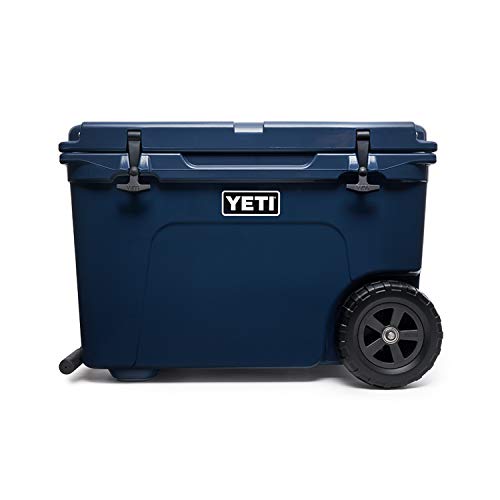 YETI Tundra Haul Portable Wheeled Cooler$450.00Check price
Keep planning
Frequently asked questions
Is the RTIC 45 QT as tough as the YETI Tundra 45?
Both use rotomolded polyethylene construction, which is the main driver of impact resistance and wall thickness in hard coolers. RTIC and YETI are built to a similar standard at this size, and neither has published independent third-party durability testing that would separate them. The practical difference buyers report is fit and finish and hardware details, not structural toughness.
Do YETI and RTIC coolers need the same ice-to-contents ratio?
Yes. Both are rotomolded hard coolers, so the same packing convention applies: roughly a 1:1 ice-to-contents ratio for an overnight trip, 1.5:1 for two to three days, and 2:1 for four or more days. The brand does not change the physics of how much ice a 45-quart shell needs to stay cold.
Which cooler is easier to find on sale, YETI or RTIC?
RTIC runs direct-to-consumer promotions more often since it sells primarily online, while YETI's pricing is more consistent across retailers due to tighter minimum advertised price policies. If price flexibility matters to you, RTIC is generally the easier one to catch on a discount.
Will a rotomolded cooler like these outlast a hinged Coleman?
Usually yes, especially outdoors in the sun or if the cooler gets sat on, stood on, or bounced around in a truck bed. The thicker rotomolded wall and tighter gasket resist warping and UV degradation better than a hinged foam-injected shell over several seasons of use.
Is 45 quarts the right size for a family of four?
Forty-five quarts is workable for a weekend but tight for four people on a longer trip once you account for food, drinks, and ice together. Most families run two coolers instead: one for food opened at meals, one for drinks opened constantly. Check exact sizing on the cooler size calculator.
Do I need a rotomolded cooler for a two-night car camping trip?
Not really. On a two-night trip with shade and a full ice load, a $50 to $75 hinged cooler holds ice acceptably well, since the gap between cooler classes widens mainly on longer, hotter trips. Save the rotomolded upgrade for trips of four or more days or hot-climate camping.
Get the car camping checklist
One printable page: the full packing checklist plus our three complete setups with current prices. No sales sequence.
Used only to send the list. You can also read every setup free on this site.Researched guidance, not professional advice. Figures are published specifications or clearly labelled conventions; check your own gear's manual and your campground's rules.