How to stay warm car camping

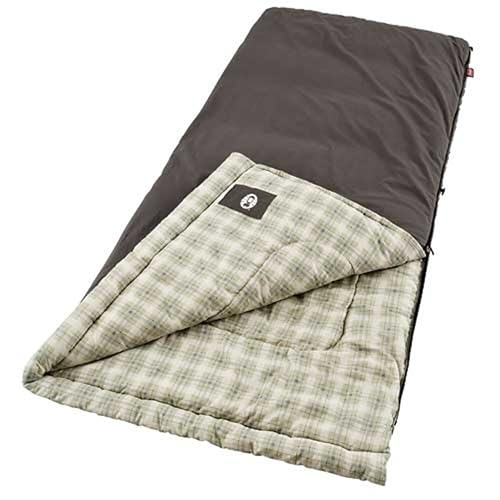
Coleman Brazos Sleeping Bag
$53.99The Coleman Heritage Big & Tall 10F Flannel Sleeping Bag ($101.99) is rated well below freezing, which gives real margin on a cold shoulder-season night rather than a bag rated right at the edge of the forecast low.
Check price on AmazonSpecsWhy can you never use a fuel-burning heater in a tent or car?
Any stove, heater, or grill that burns propane, butane, charcoal, or gasoline consumes oxygen and produces carbon monoxide as it burns. In an enclosed space, a tent, a closed car, or even a vestibule with the flaps zipped, that carbon monoxide has nowhere to go and builds up fast. It is completely odourless, so people do not wake up or notice anything wrong before it becomes dangerous.
This rule has no exceptions for size, brand, or how briefly you run it: never run a fuel-burning stove, heater, or grill inside a tent or a closed car, for any amount of time, for any reason. Warmth comes from insulation and layering, covered below, not combustion. See our full carbon monoxide camping safety guide for the complete rundown.
What sleeping bag rating do you actually need?
Buy a bag rated at least 10 to 15 degrees colder than the coldest night you expect, not right at that temperature. Manufacturer ratings describe the coldest temperature at which an average sleeper stays alive and reasonably comfortable, not a cozy night's sleep, so a bag rated exactly to your forecast low often feels marginal in practice.
The Coleman Brazos Sleeping Bag ($53.99) is rated to 30F and covers most three-season car camping. For genuinely cold shoulder-season trips, the Coleman Heritage Big & Tall 10F Flannel Sleeping Bag ($101.99) gives real margin down toward freezing and below.
What R-value pad do you need for a cold night?
Match the pad to the temperature, not the bag: overnight lows of 32 to 39F call for roughly R 3.5 to 4, and 20 to 31F calls for R 4.5 to 5. Since R-values add when stacked, a foam pad under an inflatable pad is a legitimate way to reach a higher combined rating without buying one expensive high-R pad.
The Hikenture 4-Inch Thick Self Inflating Sleeping Pad ($85.49), rated R 9.5, covers genuinely cold nights on its own. Run your specific overnight low through our sleeping pad R-value calculator before a cold-weather trip, and remember that a cot loses extra heat underneath to moving air, so add roughly R 1 if you are sleeping on one.
Gear this guide recommends

How does layering actually work overnight?
Change out of the clothes you wore during the day before getting into your sleeping bag, even if they still feel dry; daytime clothing holds moisture from sweat and activity that will make you colder overnight, not warmer. Sleep in dry base layers, a hat, and dry socks instead, since a surprising amount of heat is lost through the head and feet.
Avoid overstuffing the sleeping bag with too many bulky layers, which can compress the bag's own insulation and reduce its effectiveness. A moisture-wicking base layer plus one mid layer inside a properly rated bag usually outperforms several thick layers stuffed into a bag that is now too tight to loft properly.
Does a hot water bottle actually help?
Yes, and it is one of the simplest, safest ways to add real warmth without any fuel or electricity. Fill a sturdy, sealed bottle with hot water before bed, wrap it in a sock or a thin towel so it is not directly on skin, and place it at your feet or against your core inside the sleeping bag. It retains useful heat for a few hours, which is often enough to get through the coldest part of the night.
This works because your feet are usually the coldest part of your body overnight and the hardest to warm through layering alone; a small, contained heat source there makes a noticeable difference without any of the carbon monoxide risk of a fuel-burning device.
What else actually helps on a cold night?
Insulate the tent floor itself with a footprint or tarp underneath and, if conditions allow, a rug or extra layer inside, since cold radiating up through a bare tent floor works against even a good pad. Keep the tent zipped and vents adjusted to block wind without fully sealing off airflow, since some ventilation still matters for condensation control even on a cold night.
Eat something before bed. Digesting food generates body heat over the following couple of hours, which is a real, if modest, contributor to staying warm overnight, and it costs nothing extra to pack.
Keep planning
Frequently asked questions
Can you use a propane heater in a tent to stay warm?
No, never. Any fuel-burning heater, propane, butane, or otherwise, consumes oxygen and produces carbon monoxide inside an enclosed tent, and the gas is completely odourless. This applies even to heaters marketed as low-output or portable. Warmth should come from a properly rated sleeping bag, an insulating pad, layered clothing, and a hot water bottle, not combustion of any kind.
What sleeping bag rating do I need for freezing temperatures?
Buy a bag rated at least 10 to 15 degrees colder than the coldest night you expect, so a bag rated around 10F to 20F for nights that reach freezing. Manufacturer ratings describe survivable comfort at that temperature for an average sleeper, not a genuinely cozy night, so extra margin matters more in cold conditions than in mild ones.
Does a hot water bottle work for camping?
Yes. A sealed bottle filled with hot water, wrapped in a sock or thin towel and placed at your feet inside the sleeping bag, retains useful heat for a few hours and noticeably improves comfort on a cold night. It carries no carbon monoxide risk, unlike any fuel-burning device, which makes it one of the safest ways to add extra warmth.
Why do R-values matter more than sleeping bag ratings in cold weather?
Because heat loss to the ground under your body is often greater than heat loss to the air around you, especially on still, clear nights. A sleeping bag's rating assumes an adequately insulated pad underneath it; without one, even a well-rated cold-weather bag underperforms its rating significantly, since the compressed insulation touching the ground does very little work.
Get the car camping checklist
One printable page: the full packing checklist plus our three complete setups with current prices. No sales sequence.
Used only to send the list. You can also read every setup free on this site.Researched guidance, not professional advice. Figures are published specifications or clearly labelled conventions; check your own gear's manual and your campground's rules.