Camp kitchen setup

MalloMe Camping Cookware 17 pcs Mess Kit with 1.1L Kettle for
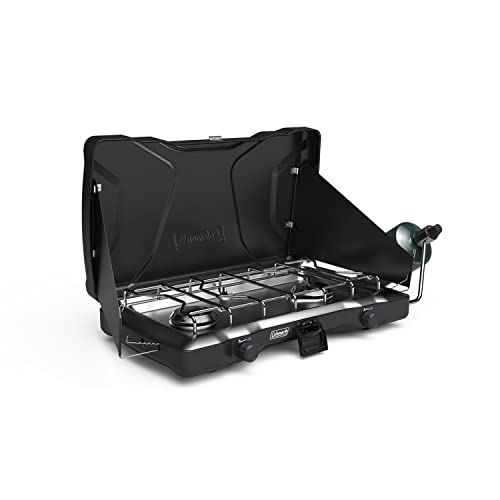
$33.99The Coleman Triton 2-Burner Propane Stove ($83.99) at 22,000 BTU total covers real family cooking, two pots or a pot and a griddle pan at once, without the size or cost of a three-burner setup most car campers do not need.
Check price on AmazonSpecsWhat do you actually need in a camp kitchen?
A working camp kitchen is four things: a stove, cookware, a surface to work on, and fuel. Everything else, a dedicated kitchen station, a griddle, a wash station, makes cooking more pleasant but is not required to make a real meal at a campsite. Start with the four core pieces and add specialty gear once you know what your group actually cooks.
A 17-piece cookware set like the MalloMe Camping Cookware Mess Kit ($33.99) includes a pot, a pan, and basic utensils in one packable set, which is enough to cook a full meal for a family without buying pieces individually.
What stove size do you actually need?
A two-burner propane stove in the 20,000 to 22,000 BTU total range, like the Coleman Triton 2-Burner Propane Stove ($83.99), covers real family cooking: one burner for a main dish, one for a side or coffee. A single-burner butane stove is enough for one or two people cooking simple meals, but a family cooking together generally wants two burners running at once.
Run your fuel math for the trip on our propane calculator before you go. A 2-burner stove at 10,000 BTU per burner, both on high, empties a 1 lb propane cylinder in about an hour, per Coleman's own stated burn time, though typical cooking averages closer to 60 percent throttle, which stretches that considerably.
How much propane do you need to bring?
A 1 lb (16.4 oz) cylinder holds about 21,600 BTU. At typical cooking throttle, one cylinder covers roughly two to three meals for a family of four on a two-burner stove, so bring at least one cylinder per day of cooking, more for a colder trip since cold below about 40F reduces cylinder pressure and cooking efficiency.
The Propane Fuel Cylinders 4-Pack ($39.00) covers a typical long weekend with margin. For trips of three or more days, a 20 lb tank with an adapter hose is cheaper per BTU than buying multiple small cylinders, though it adds bulk and weight to what you are packing.
Gear this guide recommends


Do you need a dedicated kitchen table?
Not for a first trip, but it helps quickly once you are cooking more than simple one-pot meals. A dedicated kitchen table keeps the stove off the picnic table, which frees that table for eating, and gives you a stable, level surface for prep work that a cooler lid or tailgate does not. The JOUYEK Folding Portable Kitchen Table ($59.99) includes storage space underneath for cookware and condiments.
If you are not ready to add a dedicated table, a sturdy folding camping table works fine as a stopgap; see our best camping tables roundup for options that hold a stove's weight and heat without an issue.
How do you organize a camp kitchen so cooking is not a chore?
Set up in a fixed order every time: stove and fuel first, cookware and utensils within reach of the stove, then a designated spot for the cooler nearby but not directly next to the flame. Keep a small tote or bin with the basics, a lighter, tongs, a cutting board, a dish towel, packed as one unit so you are not hunting through multiple bags at mealtime.
Wash dishes promptly after each meal rather than letting them stack up, since a small pile of dirty dishes at a campsite attracts insects and wildlife faster than at home. A simple two-basin wash system, one for soapy water and one for rinse, works well without needing a full sink setup.
What should you know about cooking safely at a campsite?
Set the stove up outside the tent, on stable, level, non-flammable ground, and never inside a tent or a vestibule with the flaps zipped, even briefly and even in bad weather. A stove burning propane, butane, or any other fuel consumes oxygen and produces carbon monoxide, which builds up fast in an enclosed space and has no smell.
Keep a small fire extinguisher or a bucket of water within reach whenever the stove is lit, and turn off the fuel supply at the tank, not just the burner knob, when you finish cooking, so a stray flame cannot restart from a leftover trickle of gas.
Keep planning
Frequently asked questions
What is the minimum gear for a camp kitchen?
A two-burner propane stove, a compact cookware set with at least one pot and one pan, basic utensils, and enough fuel for your trip length. A folding table and a dedicated wash station make cooking easier but are not required for a first trip; a picnic table and a cooler lid work as substitutes while you decide what you actually need.
How much propane do I need for a weekend of camping?
Plan on at least one 1 lb cylinder per day of cooking on a two-burner stove at typical throttle, so two to three cylinders for a standard two-night weekend. Cold weather below about 40F reduces cylinder pressure and efficiency, so bring extra margin for a cold-weather trip rather than cutting it close.
Can you cook inside a tent if it is raining?
No, never cook with a fuel-burning stove inside a tent or a closed vestibule, even in rain. Carbon monoxide from the burning fuel builds up fast in an enclosed space and is odourless, so there is no early warning. Cook under a separate rain tarp, an awning, or a screen house instead, positioned well clear of the sleeping tent.
How many burners do I need for a camp stove?
Two burners covers most family cooking, one for a main dish and one for a side or coffee, at around 20,000 to 22,000 BTU total. A single burner is enough for one or two people cooking simple meals. Three or more burners mainly help when cooking for larger groups or running multiple dishes that need close timing.
Get the car camping checklist
One printable page: the full packing checklist plus our three complete setups with current prices. No sales sequence.
Used only to send the list. You can also read every setup free on this site.Researched guidance, not professional advice. Figures are published specifications or clearly labelled conventions; check your own gear's manual and your campground's rules.