Best electric coolers for car camping
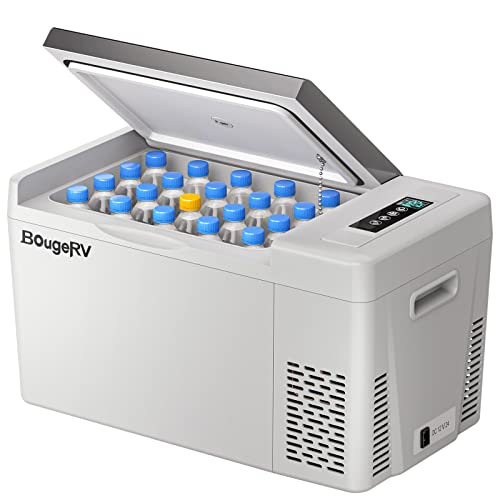
BougeRV 12v refrigerator 23 Quart
$169.99The BougeRV 12v Refrigerator, 23 Quart uses compressor cooling, which means it can hold food genuinely cold or frozen regardless of outside heat, unlike a thermoelectric cooler that struggles once the air around it gets warm. At 23 quarts it fits a car camping weekend for a small family, runs off a car's 12V outlet or a portable power station, and costs a fraction of the Dometic and EcoFlow options built for longer off-grid stretches.
Check price on AmazonSpecsNot sure what size you need? Run the Will a power station run my cooler all weekend first, then come back to the picks.
Beginner, intermediate and expert picks
Beginner: Cheapest plug-in cooler
For weekend campers who mainly want cold drinks without buying ice, and are fine with a modest temperature drop.- Beginner pick
 Igloo IE24 Thermoelectric Cooler & Warmer$129.99Check priceSpec sheet
The Igloo IE24 Thermoelectric Cooler & Warmer ($129.99) plugs into a car's 12V outlet or a standard wall outlet and cools its interior up to 36F below the surrounding air, which is enough to keep drinks and snacks cold on a weekend trip without buying or draining ice. It is the simplest, cheapest entry point into an electric cooler.
Skip it if: Hot weather or anyone who needs food to stay near freezing, since thermoelectric coolers only cool relative to ambient temperature and lose ground fast once it is warm outside.
Intermediate: Buy once
For families who want a cooler that behaves like a real fridge or freezer for a weekend trip.- Intermediate pickBougeRV 12v refrigerator 23 Quart$169.99Check priceSpec sheet
The BougeRV 12v Refrigerator, 23 Quart ($169.99) uses actual compressor refrigeration, the same underlying technology as a home fridge, so it holds a set temperature regardless of how hot it is outside. It runs off a car's 12V outlet, a wall outlet, or a portable power station, and includes battery-protection settings so it will not silently drain a car battery overnight.
Skip it if: Anyone who only needs cold drinks for a weekend and does not want to spend more than a basic hard cooler with ice would cost.
Expert: Performance ceiling
For frequent campers who want dual-zone fridge and freezer space and top-tier build quality.- Expert pick
 Dometic CFX2 45L Electric Cooler$879.99Check priceSpec sheet
The Dometic CFX2 45L Electric Cooler ($879.99) is a premium compressor fridge from a brand built for demanding off-grid cooling, with a wide temperature range down to well below freezing. It is genuinely the ceiling of what a plug-in cooler can do for a car camping trip, powered by the car or by a large portable power station.
Skip it if: A typical weekend car camping trip. This price only makes sense if you camp very often, need serious food capacity across multiple zones, or already own the power station to run it comfortably.
| Product | Price | Key spec | Best for |
|---|---|---|---|
| Igloo IE24 Thermoelectric | $129.99 | Thermoelectric, 32 cans | Cheapest plug-in cooler |
| BougeRV 12v Refrigerator, 23 Qt | $169.99 | Compressor, -8F to 50F | Most car camping weekends |
| BougeRV 12V Refrigerator CRPRO, 30 Qt | $212.48 | Compressor, -8F to 50F | Bigger family, same trip length |
| Dometic CFX2 45L | $879.99 | Compressor, dual-zone capable | Frequent campers, top build |
| SubSun 27 Quart | $98.79 | Thermoelectric, cool + warm | Budget cooler and warmer combo |
| Jackery Explorer 240D | $189 | 256Wh power bank | Runs a compressor cooler for a weekend |
Thermoelectric or compressor: which type of electric cooler for a weekend trip?
Thermoelectric coolers use a Peltier chip that runs continuously, drawing roughly 40 to 60 watts nonstop, and they can only cool to about 35 to 40F below the surrounding air. That means on a hot day they may only get down to the 70s, which is fine for cold drinks but not for keeping raw food safe. Compressor coolers cycle on and off like a home fridge, averaging roughly 20 to 55 percent of their rated running wattage depending on heat, and they can reach true refrigerator or freezer temperatures regardless of how hot it is outside.
For a weekend at a drive-up site in warm weather, a compressor cooler like the BougeRV 12v Refrigerator, 23 Quart is the safer choice for anything beyond drinks and snacks. A thermoelectric cooler like the Igloo IE24 is a fine, cheaper choice if cold drinks are genuinely all you need it for.
How do you power an electric cooler at a campsite without hookups?
Most drive-up campsites have no electrical hookup, so an electric cooler runs off one of two sources: the car's 12V outlet, or a separate portable power station. Running off the car works for short stretches but drains the car's battery if the engine is off for long, which is why compressor coolers like the BougeRV line include multi-level battery protection that shuts the cooler off before the car battery is too low to start the engine.
A portable power station, like the Jackery Explorer 240D ($189) or the EcoFlow River 2 ($239), disconnects the cooler entirely from the car's starting battery and can be recharged separately between trips or with a small solar panel at the site. Run your own numbers on the fridge and battery calculator before deciding whether your cooler and trip length need one.
How does an electric cooler compare to a regular ice cooler for a weekend?
A well-packed hard cooler with ice at a 1.5:1 ratio to contents holds a two to three day trip comfortably and costs far less upfront, but it needs a resupply of ice and produces meltwater to manage. An electric cooler costs more upfront and needs a power source, but never runs out of cold and holds a steady temperature the entire trip. Compare the two directly against your own cooler size needs using the ice calculator and our best camping coolers roundup.
What size electric cooler do I need for a weekend?
Electric coolers are sold in quarts or liters like any other cooler, and the same rough sizing logic applies: about 1.25 quarts of food per person per day. Unlike an ice cooler, you do not need to add ice-volume on top of that, since the compressor or thermoelectric unit does the cooling continuously.
- One to two people, drinks focus: 14 to 20 quarts, thermoelectric is fine
- Small family, weekend trip: 23 to 30 quarts, compressor recommended
- Larger family or multi-day trip: 45 quarts and up, compressor with dual-zone if budget allows
How we chose
Every pick here is based on published cooling technology, temperature range, wattage, and capacity specs plus verified owner reviews on Amazon; nothing was tested in person by us. Draw and wattage figures reflect general compressor and thermoelectric behavior stated by manufacturers and industry sources, not a measurement we took ourselves.
We separated thermoelectric and compressor models clearly rather than ranking them against each other, since they solve different problems and a buyer choosing between them needs to know which one actually fits a weekend at a drive-up site before price becomes the deciding factor.
Buying tips
Will an electric cooler drain my car battery overnight?
It can if plugged into the car with the engine off for many hours. Look for a cooler with multi-level battery protection, and consider a portable power station for anything longer than a single evening.
Is a thermoelectric cooler good enough for meat or dairy?
Not reliably in warm weather, since it only cools relative to ambient temperature. Use a compressor cooler for anything that needs to stay genuinely cold, not just cooler than outside air.
Do I need a power station, or can I just use the car?
The car works for shorter trips or if someone is driving during the day. A power station is worth it once the cooler needs to run overnight with the engine off for more than a few hours.
Are electric coolers noisy at a campsite?
Compressor coolers run in the 42 to 45 decibel range per their published specs, similar to a quiet home fridge; thermoelectric coolers are generally quieter since there is no compressor cycling on and off.
Also worth considering
 SubSun 27 Quart Electric Cooler & Warmer with Handle 12V/24V DC$98.79Check priceSpec sheet
 Wagan EL6234 14L Electric Cooler Warmer Bag Portable Thermoelectric$99.95Check priceSpec sheet
 BougeRV 12V Refrigerator CRPRO 30QT$212.48Check priceSpec sheet
 Jackery Explorer 240D Power Bank,256Wh,200W DC$189.00Check priceSpec sheet
 EF ECOFLOW Portable Power Station RIVER 2$239.00Check priceSpec sheet
Keep planning
Frequently asked questions
What is the difference between a thermoelectric and compressor electric cooler?
A thermoelectric cooler runs continuously and only cools to about 35 to 40F below the outside air, so it struggles in hot weather. A compressor cooler, like the BougeRV 12v Refrigerator, 23 Quart ($169.99), cycles on and off like a home fridge and can hold a true cold or freezing temperature regardless of how hot it is outside.
Can I run an electric cooler off my car for a whole weekend?
Only with the engine running, or briefly with it off. Leaving a cooler plugged into a parked car's 12V outlet for many hours risks draining the starting battery, which is why compressor coolers include battery-protection cutoffs and why many campers pair one with a portable power station like the Jackery Explorer 240D ($189) instead.
How much does an electric cooler cost to run at a campsite?
A compressor cooler typically draws its full rated wattage only 20 to 55 percent of the time it is running, cycling on and off. A thermoelectric cooler draws its rated wattage, usually 40 to 60 watts, essentially continuously, which adds up faster over a weekend even though the units themselves often cost less.
Is an electric cooler worth it over a regular ice cooler for car camping?
It depends on trip length and whether you want to manage ice. A hard cooler with ice handles a two to three day weekend well and costs less upfront; an electric cooler costs more but never needs an ice resupply and holds a steadier temperature, which matters most on longer or hotter trips.
What size electric cooler do I need for a family weekend?
Plan on roughly 23 to 30 quarts for a small family over a weekend, based on about 1.25 quarts of food per person per day. The BougeRV 12v Refrigerator, 23 Quart ($169.99) is sized directly for this trip; step up to a dual-zone model for a larger group or a longer stay.
Get the car camping checklist
One printable page: the full packing checklist plus our three complete setups with current prices. No sales sequence.
Used only to send the list. You can also read every setup free on this site.Researched guidance, not professional advice. Figures are published specifications or clearly labelled conventions; check your own gear's manual and your campground's rules.